



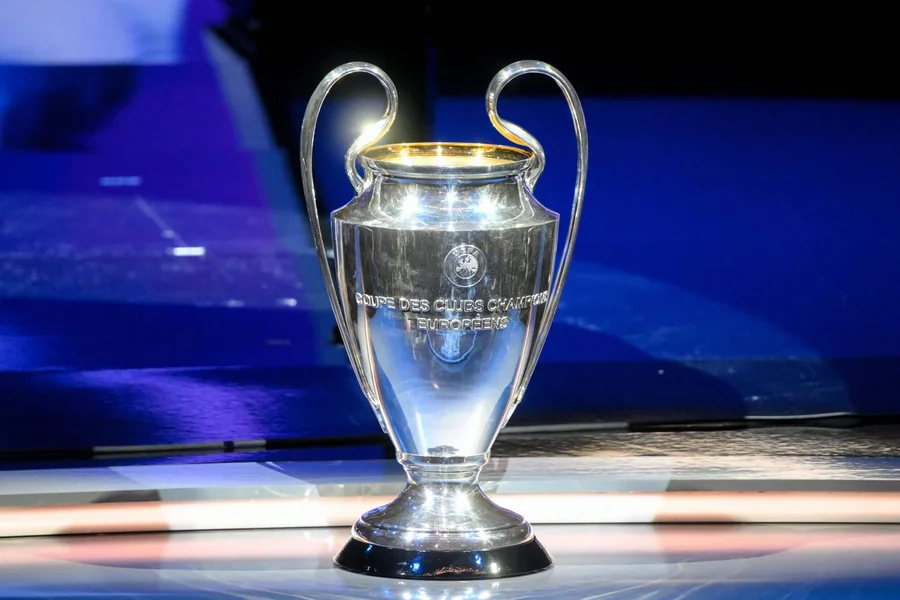
Confusion surrounding the new champions league format has been common since UEFA overhauled its premier club competition ahead of the 2024-25 season, replacing decades of familiar group-stage structure with an entirely new system. A clear grasp of the current uefa champions league format supports more accurate market interpretation, particularly for bettors accustomed to the previous eight-group setup used since 2003. Android access via 4rabet apk download supports engagement with markets across the full competition, from league phase fixtures through to the final.
Sports betting continues to operate within a fragmented regulatory landscape across many regions, including India, where gambling legislation is determined primarily at the state level rather than through a unified national framework. Regulatory conditions vary considerably and remain subject to change, making periodic review of applicable local rules a relevant part of ongoing engagement with betting platforms and competition-specific markets.
From Group Stage to League Phase: What Changed
Understanding how champions league works under the revised structure begins with recognizing the shift away from the traditional format used for over two decades. Previously, 32 clubs were divided into eight groups of four, with the top two from each group advancing to a round of 16 knockout stage. This structure, in place since the 2003-04 season, was replaced entirely starting with the 2024-25 campaign.
A comparison of the old and new formats is presented below.
| Feature | Previous Format (Pre-2024) | Current Format (2024-25 Onward) |
| Number of Teams | 32 | 36 |
| Stage Structure | 8 groups of 4 teams | Single league table (league phase) |
| Matches per Team | 6 | 8 |
| Total Matches (League Stage) | 96 | 189 |
| Advancement Method | Top 2 per group | Top 8 automatic; 9th–24th enter play-offs |
| Elimination Point | Bottom 2 per group | 25th–36th eliminated |
The new structure, often referred to as the “Swiss model” due to its resemblance to pairing systems used in chess and esports tournaments, places all 36 clubs into one combined table rather than isolated groups, with each team facing eight different opponents drawn from four seeding pots.
How the League Phase Operates
Each club competing in the league phase is seeded into one of four pots based on UEFA club coefficient rankings, with the reigning champion automatically placed in the top seed position. Every team then faces two opponents from each of the four pots, resulting in eight total league phase fixtures, split evenly between four home and four away matches.
Points accumulated across these eight matches determine final league phase standings, which directly dictate progression into the knockout stage. A breakdown of qualification outcomes based on final standings appears below.
| League Phase Position | Outcome |
| 1st–8th | Direct qualification to Round of 16 |
| 9th–24th | Enter two-legged knockout play-off round |
| 25th–36th | Eliminated from all European competition |
This structure introduces a play-off round absent from the previous format, requiring teams finishing in the middle portion of the table to win an additional two-legged tie before reaching the traditional round of 16 stage.
The Knockout Stage Structure
Once the round of 16 is reached, the competition reverts to a familiar two-legged knockout format extending through the quarter-finals and semi-finals, culminating in a single-match final at a neutral venue. Aggregate scoring across both legs determines the winner of each tie, with extra time and penalties applied where aggregate scores remain level.
A notable adjustment introduced for the 2025-26 season grants teams finishing in the top four of the league phase a guarantee of hosting the second leg during the round of 16 and quarter-final stages, while the top two league phase finishers receive home advantage in the semi-finals should they progress that far.
Betting Implications of the Expanded Format
The increased number of league phase matches has broadened the range of available betting markets throughout the competition’s opening months, given that every participating club now plays eight fixtures against varied opposition rather than a fixed set of three rivals faced twice. This variety affects market depth for outright winner odds, group-stage-style qualification markets, and player-specific scoring propositions spread across a longer initial phase.
Squad rotation has become a more prominent factor under the new format, given the increased fixture load facing clubs competing across multiple competitions. Awareness of rotation patterns, particularly for clubs already through to the knockout stage with qualification secured, carries relevance for markets tied to specific league phase matches where a full-strength lineup cannot be assumed.
Qualification Pathways Into the Competition
Entry into the Champions League league phase depends on a combination of domestic league finishing position and each association’s UEFA coefficient ranking, which determines how many clubs from a given country gain automatic entry. Additional qualification routes exist through preliminary qualifying rounds for clubs from lower-ranked domestic leagues, alongside guaranteed places awarded to the reigning Champions League and Europa League title holders where applicable.
| Entry Route | Description |
| Domestic League Position | Primary qualification method based on prior season finish |
| Association Coefficient | Determines number of automatic slots per country |
| European Performance Spots | Additional slots for top-performing associations |
| Qualifying Rounds | Multi-round path for clubs from lower-ranked leagues |
| Title Holder Berths | Reserved places for defending Champions League and Europa League winners |
Applying Format Knowledge to Betting Strategy
Recognition of how the expanded 36-team structure affects match significance supports more informed market analysis throughout the season. Early league phase fixtures carry different stakes compared to the former group stage, since qualification now depends on cumulative standing across eight opponents rather than performance within a closed four-team group, altering how “must-win” scenarios develop as the phase progresses.
Mobile application access supports timely engagement with markets spanning the extended league phase calendar, given fixtures are now spread across additional matchweeks compared to the previous six-match group stage schedule.
Responsible Engagement with Champions League Betting
Age restrictions apply across licensed betting platforms, with a minimum requirement of 18 years in most jurisdictions and 21 years in some, with verification forming part of standard account registration procedures. Indicators of problematic gambling behavior include spending beyond planned limits, difficulty stopping despite intent to do so, and use of betting as a response to financial or emotional strain.
Support resources, including helplines and self-exclusion registries, remain available across a number of jurisdictions for individuals seeking assistance with gambling-related concerns.
Summary
Grasping how champions league works under the current uefa champions league format requires understanding the shift from eight closed groups to a single 36-team league phase, along with the new play-off round separating automatic qualifiers from eliminated clubs. The new champions league format, introduced for the 2024-25 season and retained since, has expanded match volume, broadened betting market variety, and altered the competitive stakes attached to individual league phase fixtures. Continued familiarity with qualification pathways and knockout-stage seeding rules supports more informed engagement with Champions League betting markets across an extended competition calendar.
