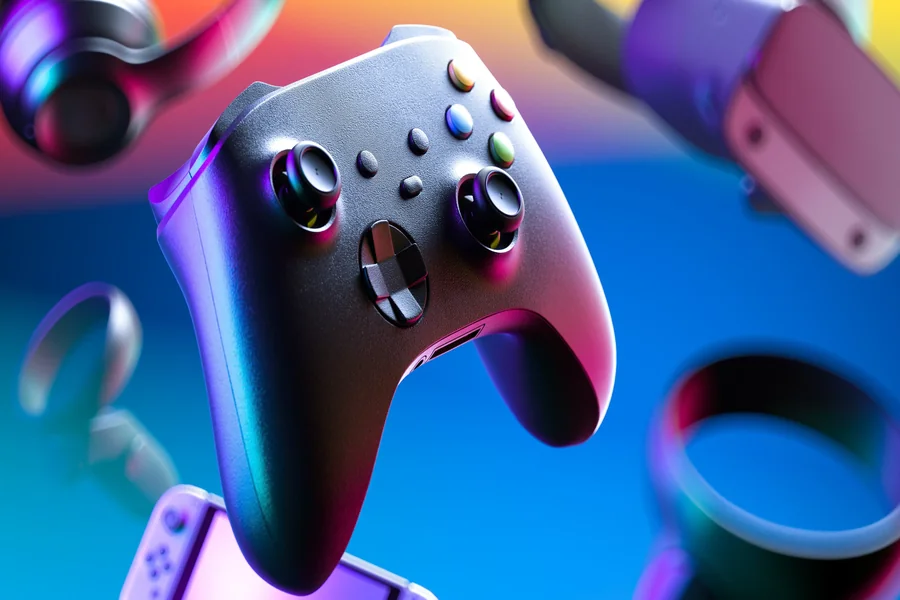
The gaming landscape has undergone a profound transformation over the past few decades. As technology has evolved, so too has the way we play, experience, and interact with video games. From the introduction of new hardware to the rise of immersive experiences and the increasing role of artificial intelligence, technology has reshaped every facet of the gaming world. In this article, we delve deep into how these technological advancements have not only redefined gaming Kenya bet but also continue to drive innovation across various aspects of the industry.
The Rise of High-Definition Graphics and Visuals
One of the most significant advancements in gaming technology is the improvement in graphic design and visual fidelity. Early video games, with their pixelated graphics and simple color schemes, have evolved into photorealistic visuals that captivate players in new ways. The introduction of powerful gaming consoles like the PlayStation 5 and Xbox Series X has enabled game developers to create environments that feel alive, immersive, and highly detailed.
These consoles are equipped with ray tracing technology, which simulates the way light interacts with virtual environments, resulting in stunningly realistic lighting and shadow effects. Graphics cards, such as those by NVIDIA and AMD, are at the forefront of this revolution, offering unparalleled performance that enhances every aspect of gameplay. As a result, the gaming experience has become more lifelike, allowing players to feel truly transported into the worlds they explore.
Virtual Reality (VR) and Augmented Reality (AR) Gaming
Another groundbreaking advancement in the gaming industry has been the development of virtual reality (VR) and augmented reality (AR) technologies. VR offers players the ability to fully immerse themselves in a digital world, where every movement they make translates into actions within the game. Popular VR headsets, such as the Oculus Quest and PlayStation VR, have brought this once-niche technology into the mainstream, allowing players to experience games paris sportif in a way that was previously impossible.
On the other hand, augmented reality (AR) has revolutionized mobile gaming. Games like Pokémon GO have demonstrated how AR can blend the real world with virtual elements, creating a unique and engaging experience. Players can now interact with their surroundings in ways that blur the line between the physical and virtual worlds. This fusion of reality and gaming has opened up new possibilities for game developers, paving the way for even more innovative and engaging experiences in the future.
Cloud Gaming: The Future of Accessibility
The concept of cloud gaming has emerged as a game-changer for the industry. Services like Google Stadia, NVIDIA GeForce Now, and Xbox Cloud Gaming allow players to stream games directly to their devices without needing high-end hardware. This has democratized access to high-quality gaming experiences, as even those with lower-end PCs or smartphones can enjoy graphically demanding titles.
Cloud gaming operates on remote servers, where the processing of game data takes place, and the video feed is streamed back to the player’s device. This eliminates the need for expensive gaming consoles or PCs, making gaming more accessible than ever. Furthermore, cloud gaming enables cross-platform play, allowing players on different devices to connect and play together seamlessly.
Artificial Intelligence: Enhancing Gameplay and NPCs
Artificial intelligence (AI) has significantly improved the way non-playable characters (NPCs) interact within video games paris sportif. AI has made NPCs smarter, more reactive, and more lifelike, enhancing the overall gaming experience. In many modern games, NPCs adapt to player behavior, responding in ways that are both realistic and unpredictable. This creates a dynamic gaming world where the player’s actions have tangible consequences.
Additionally, AI has been used to improve the game development process itself. Procedural generation algorithms, powered by AI, are now used in games like Minecraft and No Man’s Sky to create vast, dynamic worlds that evolve based on the player’s actions. AI also plays a role in game testing, where it can simulate human behavior to identify bugs and optimize gameplay, streamlining the development process.
The Role of Online Multiplayer and Social Connectivity
The rise of high-speed internet and improved network infrastructures has led to the growth of online multiplayer gaming. The ability to play games with friends or strangers across the globe has redefined how people interact with video games. Games like Fortnite, Call of Duty: Warzone, and League of Legends have built expansive communities where millions of players connect in real-time, collaborating or competing in thrilling, dynamic gameplay.
This social aspect of gaming has also influenced the rise of live-streaming platforms like Twitch and YouTube Gaming, where players can showcase their skills, interact with their audiences, and even earn money through sponsorships and donations. Esports, a competitive form of gaming, has gained immense popularity, with professional leagues, tournaments, and sponsorships turning gaming into a global spectator sport.
Mobile Gaming: The Rise of Handheld Power
The rapid growth of mobile gaming has been another pivotal change in the gaming landscape. With the widespread use of smartphones and tablets, mobile gaming has become a massive industry in its own right. Games like Candy Crush, Clash Royale, and PUBG Mobile have not only captivated millions of players but have also introduced innovative monetization strategies, such as in-app purchases and ads, making gaming accessible to people of all ages and backgrounds.
The continued advancement of mobile technology, such as the introduction of 5G connectivity, has further enhanced mobile gaming experiences, offering faster download speeds, lower latency, and better graphics. As a result, the mobile gaming market is expected to continue expanding, with new innovations in gaming hardware, software, and gameplay features continually pushing the boundaries of what is possible on mobile devices.
The Evolution of Gaming Hardware
Advances in gaming hardware have played a significant role in shaping the gaming industry. The introduction of high-refresh-rate monitors, mechanical keyboards, and precision gaming mice has transformed how players engage with their favorite games. Additionally, gaming peripherals like virtual reality headsets and motion controllers have added a new layer of interactivity, enabling more immersive experiences.
Gaming laptops have also become a powerful alternative to traditional desktops, offering portability without compromising on performance. These laptops are equipped with advanced graphics cards, high-performance processors, and fast storage drives, allowing gamers to enjoy their favorite titles on the go without sacrificing visual quality or speed.
Conclusion: The Future of Gaming
Technology has undeniably transformed the gaming landscape in profound ways, and its evolution shows no signs of slowing down. From the development of powerful gaming consoles and VR headsets to the rise of cloud gaming and AI-powered experiences, technology has not only enhanced the quality of games but has also made gaming more accessible, social, and immersive. As new advancements continue to emerge, it will be exciting to see how the gaming world continues to evolve and innovate in the coming years.