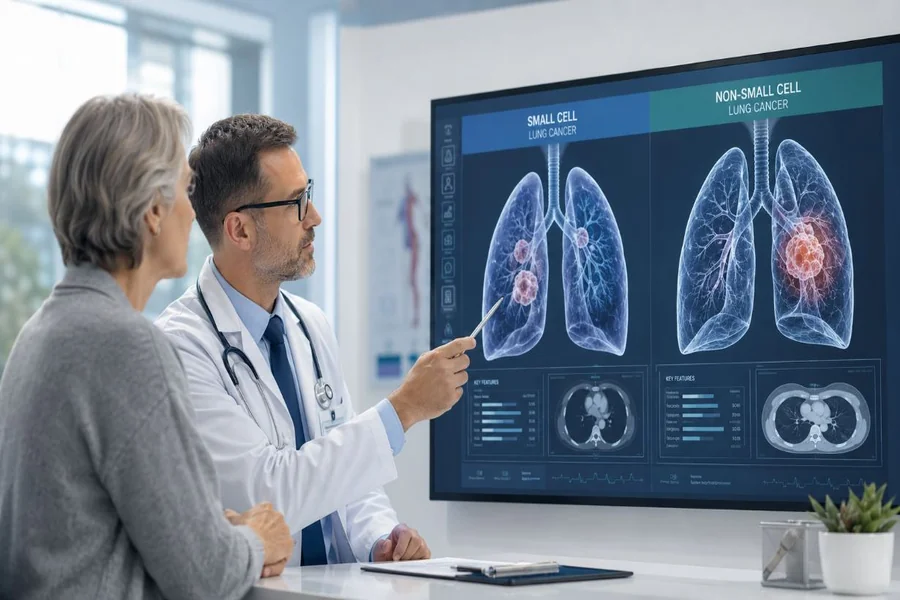
Lung cancer is often talked about as one disease, but doctors usually classify it into two major groups: small cell lung cancer and non-small cell lung cancer. This distinction matters because these two types can behave differently, spread differently, and require different treatment planning.
For patients and caregivers, understanding the difference can make medical conversations easier to follow. It can also help them ask better questions about diagnosis, staging, biomarker testing, treatment options, and clinical trials.
This article is for general education only. It should not replace medical advice from an oncology team.
Lung Cancer Is Not a Single Disease
A lung cancer diagnosis usually includes more detail than the phrase “lung cancer.” Doctors need to understand where the cancer started, what the cells look like, how far the disease has spread, and whether the tumor has specific biological features.
This information often comes from imaging, biopsy, pathology, and sometimes biomarker testing. The exact diagnosis helps guide the next steps.
Two patients may both have lung cancer, but their care plans can look very different. One patient may have early-stage non-small cell lung cancer that can be considered for surgery. Another may have small cell lung cancer that requires a different treatment strategy.
That is why identifying the type of lung cancer is one of the first important steps after diagnosis.
The Two Main Categories: SCLC and NSCLC
The two major categories of lung cancer are:
- Small cell lung cancer, often shortened to SCLC
- Non-small cell lung cancer, often shortened to NSCLC
These names come from how the cancer cells look under a microscope. But the difference is not only visual. The two groups also tend to differ in frequency, growth pattern, staging language, and treatment planning.
What is small cell lung cancer?
Small cell lung cancer is less common than non-small cell lung cancer. The American Cancer Society notes that SCLC accounts for about 10% to 15% of lung cancers and tends to grow and spread faster than NSCLC.
Patients and caregivers researching small cell lung cancer often need clear explanations about how this subtype differs from other forms of lung cancer and why treatment planning may vary.
Because SCLC can behave aggressively, doctors often evaluate it quickly and plan treatment based on whether it is limited-stage or extensive-stage.
What is non-small cell lung cancer?
Non-small cell lung cancer is the more common major category of lung cancer. It includes several subtypes, such as:
- Adenocarcinoma
- Squamous cell carcinoma
- Large cell carcinoma
The National Cancer Institute describes these NSCLC types based on how the cancer cells look under a microscope.
NSCLC can vary widely from one patient to another. Stage, tumor location, biomarker results, overall health, and prior treatments can all influence the care plan.
How the Cancer Cells Look Under a Microscope
The terms “small cell” and “non-small cell” come from pathology.
After a biopsy or tissue sample is taken, a pathologist examines the cancer cells under a microscope. This helps determine whether the cancer is SCLC or NSCLC, and if it is NSCLC, which subtype it may be.
This microscopic classification is important because it helps doctors understand the likely behavior of the cancer and which treatment approaches may be considered.
For patients, the pathology report may feel technical. But it is one of the key documents that helps the oncology team build a treatment plan.
How Growth and Spread May Differ
One of the biggest differences between SCLC and NSCLC is how they often grow and spread.
Small cell lung cancer is generally considered more aggressive. It may grow quickly and may have already spread beyond the lungs by the time it is diagnosed. The American Cancer Society notes that SCLC tends to grow and spread faster than NSCLC and is often spread beyond the lungs when found.
Non-small cell lung cancer often grows more slowly than SCLC, but this is not true for every patient. NSCLC includes different subtypes, and each case can behave differently.
This is why patients should avoid comparing their diagnosis too closely with someone else’s. Even when two people have the same broad cancer type, their stage, tumor biology, symptoms, and treatment options may differ.
Staging Is Different for SCLC and NSCLC
Staging describes how far cancer has spread. It is one of the most important parts of treatment planning.
For non-small cell lung cancer, staging is commonly described from stage 0 to stage IV. These stages reflect tumor size, lymph node involvement, and whether cancer has spread to distant parts of the body.
For small cell lung cancer, staging is often described as:
- Limited-stage small cell lung cancer
- Extensive-stage small cell lung cancer
The National Cancer Institute explains that limited-stage SCLC is in the lung where it started and may have spread to nearby areas, while extensive-stage SCLC has spread beyond those areas to other parts of the body.
This difference in staging language can confuse patients at first. A helpful question to ask the care team is: “What does my stage mean for treatment planning?”
Treatment Planning Can Be Very Different
Treatment decisions depend on many factors, including:
- Lung cancer type
- Stage
- Tumor location
- Biomarkers or genetic changes
- Previous treatments
- Lung function
- Overall health
- Patient goals and preferences
For NSCLC, treatment options may include surgery, chemotherapy, radiation therapy, targeted therapy, immunotherapy, or combinations of these approaches. The National Cancer Institute lists surgery, chemotherapy, radiation therapy, targeted therapy, and immunotherapy among NSCLC treatment options.
For SCLC, treatment often involves systemic therapy, and radiation may be used depending on stage and the individual case. The American Cancer Society describes limited-stage SCLC treatment as often involving chemotherapy and radiation, while extensive-stage SCLC is often treated with chemotherapy and immunotherapy.
These are general patterns, not personal treatment recommendations. The right plan for any patient must come from their oncology team.
Biomarkers and Genetic Testing Are Especially Important in NSCLC
In modern lung cancer care, biomarker testing can be very important, especially for non-small cell lung cancer.
Biomarkers are features of cancer cells that may help doctors understand how the tumor behaves or whether certain treatment options may be relevant. In some NSCLC cases, specific genetic changes can help guide targeted therapy or clinical trial discussions.
This does not mean every patient will have a targetable mutation or receive targeted therapy. It means testing may provide information that helps personalize the care plan.
Patients can ask their oncologist:
- Has biomarker testing been done?
- Is molecular testing recommended for my case?
- Could biomarker results affect treatment options?
- Could biomarker results affect clinical trial eligibility?
These questions are especially relevant in advanced NSCLC, where molecular testing may influence treatment planning.
Clinical Trials May Differ by Lung Cancer Type
Clinical trials are usually designed for specific patient groups. Even if two studies both involve lung cancer, they may not be open to the same patients.
Eligibility may depend on:
- SCLC vs. NSCLC
- Cancer stage
- Prior treatment history
- Biomarker status
- Current health condition
- Age
- Lab results
- Location
- Trial phase and study design
For example, an NSCLC trial may focus on patients with a certain mutation, while an SCLC trial may study a new drug combination for limited-stage or extensive-stage disease.
This is why lung cancer type matters when searching for clinical trials. Patients interested in trials should speak with their oncologist or care team before making any decisions.
Symptoms Alone Usually Cannot Tell the Type
Symptoms of small cell and non-small cell lung cancer can overlap.
Possible symptoms may include:
- Persistent cough
- Chest pain
- Shortness of breath
- Fatigue
- Unexplained weight loss
- Coughing up blood
- Hoarseness
- Repeated respiratory infections
However, symptoms alone cannot confirm whether a person has SCLC or NSCLC. Imaging, biopsy, pathology, and medical evaluation are needed.
Anyone experiencing concerning symptoms should seek medical care instead of trying to identify the cancer type through online information.
Key Differences at a Glance
| Feature | Small Cell Lung Cancer | Non-Small Cell Lung Cancer |
| Frequency | Less common | More common |
| Growth pattern | Often faster-growing | Often slower-growing, but varies |
| Staging language | Limited-stage or extensive-stage | Usually stage 0 to stage IV |
| Common subtypes | Small cell carcinoma, combined small cell carcinoma | Adenocarcinoma, squamous cell carcinoma, large cell carcinoma |
| Treatment planning | Often systemic therapy-focused, with radiation depending on stage | May include surgery, radiation, systemic therapy, targeted therapy, immunotherapy |
| Biomarker role | Evolving research area | Often important, especially in advanced disease |
| Clinical trial eligibility | Often based on SCLC stage, treatment history, and health status | Often based on NSCLC subtype, stage, biomarkers, and prior therapy |
This table is a simplified overview. Individual cases can differ, so patients should always rely on their medical team for personalized guidance.
Questions Patients Can Ask Their Care Team
A lung cancer diagnosis can feel overwhelming. Asking specific questions can make appointments more productive.
Patients and caregivers may ask:
- What type of lung cancer do I have?
- Is it small cell or non-small cell?
- What does my pathology report show?
- What stage is the cancer?
- What does this stage mean?
- Has biomarker testing been done or recommended?
- What treatment options are usually considered for this type and stage?
- Are clinical trials relevant to my situation?
- What symptoms or side effects should I report quickly?
- Where can I find reliable information about my diagnosis?
These questions do not replace medical advice, but they can help patients better understand the conversation with their oncology team.
Conclusion: Why the Difference Matters
Small cell lung cancer and non-small cell lung cancer are the two major categories of lung cancer. They differ in how common they are, how they often grow, how they are staged, and how treatment is planned.
SCLC is generally less common and often more aggressive. NSCLC is more common and includes several subtypes, with biomarker testing playing an increasingly important role in many cases.
For patients and caregivers, understanding the difference can make medical discussions clearer. It can also help them ask more focused questions about staging, treatment, biomarker testing, and clinical trials.
The most important point is this: lung cancer care should be personalized. The exact diagnosis, stage, test results, and treatment plan should always be reviewed with qualified healthcare professionals.
Frequently Asked Questions
What is the main difference between small cell and non-small cell lung cancer?
Small cell lung cancer tends to grow and spread faster, while non-small cell lung cancer is more common and includes several subtypes. Treatment planning differs between the two.
Which type of lung cancer is more common?
Non-small cell lung cancer is more common. Small cell lung cancer accounts for a smaller percentage of lung cancer cases.
Can symptoms tell whether lung cancer is small cell or non-small cell?
No. Symptoms can overlap. Imaging, biopsy, pathology, and other medical tests are needed to determine the type.
Is biomarker testing needed for lung cancer?
Biomarker testing may be important, especially in non-small cell lung cancer, because some treatment decisions and clinical trial options can depend on tumor features.
Should patients ask about clinical trials?
Yes. Patients can ask their oncology team whether clinical trials may be relevant based on their cancer type, stage, biomarkers, and treatment history.