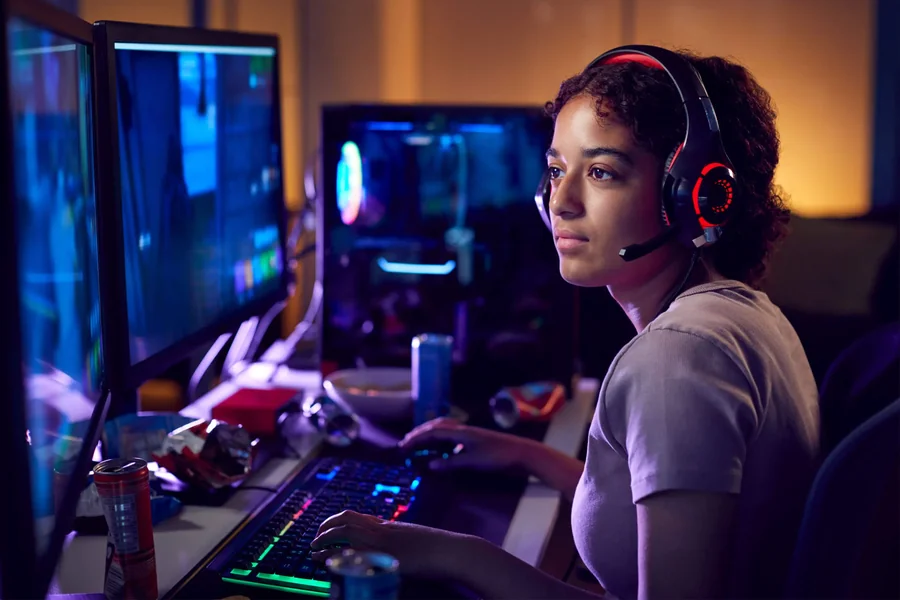
In an era where entertainment and technology dominate our lives, video games are often seen merely as a source of distraction or relaxation. However, an increasing body of research suggests that gaming, particularly certain types of online games, can also have a positive impact on cognitive function and brain health. From improving memory and concentration to enhancing problem-solving and multitasking skills, the right online games can be more than just fun; they can be a great workout for your brain.
In this article, we explore five online games that you may not know could boost your brain power. These games engage various cognitive skills such as memory, spatial reasoning, strategy, and creativity, providing mental stimulation and even improving brain functions over time.
Lumosity: A Workout for Your Brain
Lumosity is one of the most well-known brain training apps and online platforms. Created by neuroscientists, it offers a variety of games designed to challenge and improve a wide range of cognitive abilities. The games focus on memory, attention, problem-solving, speed, and flexibility. Each game is personalized to your skill level, providing an ideal balance of challenge and achievable progress.
How Lumosity Boosts Brain Power:
- Memory Training: Games such as “Memory Matrix” challenge players to remember and recall patterns, boosting short-term memory and retention skills.
- Attention and Focus: The app includes exercises that train sustained attention, teaching players how to filter out distractions and improve focus.
- Problem-Solving and Speed: Tasks that require quick decision-making and multitasking help enhance problem-solving abilities and mental agility.
- Cognitive Flexibility: The variety of games in Lumosity helps improve cognitive flexibility—the ability to switch between different tasks and adjust to new challenges.
Studies have shown that brain training exercises like those offered in Lumosity can help improve cognitive performance, especially when practiced regularly. It’s like a gym for your mind, keeping your brain fit and sharp.
Chess.com: Strategic Thinking and Planning
Chess is widely regarded as one of the best games for developing critical thinking and strategy, and Chess.com brings this timeless classic into the online arena. Whether you’re a beginner or an experienced player, online chess allows you to play against opponents of all skill levels, making it an excellent slot game for sharpening strategic thinking and problem-solving abilities.
How Chess Boosts Brain Power:
- Memory and Focus: Chess requires players to remember a wide range of strategies, tactics, and positions. The need to keep track of the game’s evolving state helps improve memory and concentration.
- Spatial Reasoning: Chess also involves spatial reasoning, where players must visualize the board and plan several moves ahead. This aspect of the slot gacor hari ini game helps strengthen spatial awareness and logical thinking.
- Strategic Thinking: To succeed in chess, players must plan ahead, anticipate their opponent’s moves, and adapt to the changing situation. This trains your brain to think several steps ahead, a skill that can be useful in many real-life situations.
- Problem-Solving: Chess forces players to solve complex problems under pressure, which can improve cognitive flexibility and problem-solving abilities.
Chess.com offers lessons, puzzles, and online multiplayer modes, making it a great tool for players looking to improve their thinking skills while having fun. Studies show that regularly playing chess can improve cognitive functions and increase intelligence over time, particularly in children and older adults.
Portal 2: Enhancing Problem-Solving and Spatial Awareness
Portal 2, a critically acclaimed puzzle-platformer from Valve, is not only an entertaining game but also an excellent workout for your brain. Players navigate complex environments, solving puzzles using the game’s unique portal mechanic—creating interconnected portals to move through space and manipulate the environment.
How Portal 2 Boosts Brain Power:
- Problem-Solving Skills: The puzzles in Portal 2 require players to think critically and logically to figure out how to manipulate the environment and create the right conditions to move forward. Each level presents a new challenge, enhancing problem-solving skills and critical thinking.
- Spatial Reasoning: The core gameplay mechanic of creating portals to navigate through space requires strong spatial reasoning abilities. Players must visualize the connections between different areas and think in three dimensions to solve puzzles.
- Creativity and Innovation: The game encourages creative thinking as players experiment with different solutions to solve complex puzzles. This helps improve cognitive flexibility and creative problem-solving abilities.
The mental stimulation provided by Portal 2 is a great way to exercise the brain’s problem-solving and spatial reasoning functions. The game also rewards persistence and learning from failure, teaching players to approach problems from multiple perspectives.
Tetris 99: Sharpening Reflexes and Memory
Tetris 99 is a competitive version of the classic Tetris puzzle game, and it adds a twist: players compete against 98 other players in real-time, with the goal of being the last player standing. While the core gameplay remains the same—arranging falling blocks to create complete lines—Tetris 99 introduces a new level of excitement and challenge, making it an excellent game for boosting memory, speed, and multitasking.
How Tetris 99 Boosts Brain Power:
- Memory and Recall: Tetris challenges players to remember and anticipate upcoming pieces while keeping track of the state of the board. This exercises both visual memory and spatial memory, helping improve short-term recall.
- Speed and Reflexes: The fast-paced nature of Tetris 99 forces players to think quickly and react to fast-falling blocks. This can help improve mental reflexes and the ability to make quick decisions under pressure.
- Multitasking: Players must manage multiple elements at once, such as arranging pieces, clearing lines, and defending against attacks from other players. This promotes multitasking and cognitive flexibility.
- Pattern Recognition: Tetris is built on the principle of pattern recognition, where players must identify the best moves based on the current configuration of blocks. This sharpens the brain’s ability to detect patterns and make predictions.
Studies have shown that playing Tetris regularly can improve cognitive skills such as memory, attention, and mental rotation. The addition of real-time competition in Tetris 99 adds an extra layer of challenge, making it even more effective at boosting brain power.
Duolingo: Boosting Memory and Language Skills
While Duolingo isn’t typically thought of as a game in the traditional sense, it incorporates elements of gaming to make language learning fun and engaging. Duolingo’s bite-sized lessons, quizzes, and challenges turn the process of learning a new language into a game-like experience. This can have a positive impact on cognitive functions, particularly memory and learning ability.
How Duolingo Boosts Brain Power:
- Memory Enhancement: Learning a new language requires memorizing vocabulary, grammar rules, and sentence structures. This constant exposure to new linguistic patterns helps improve memory and retention.
- Multitasking and Cognitive Flexibility: Duolingo exercises the brain by requiring players to listen, read, write, and speak in a foreign language. This multi-modal learning process enhances cognitive flexibility and multitasking abilities.
- Problem-Solving and Critical Thinking: As learners progress through different levels of difficulty, they are encouraged to think critically and solve problems related to language comprehension and usage.
- Attention to Detail: To master a language, learners must pay attention to pronunciation, spelling, and grammar, which can enhance attention to detail and focus.
Studies have shown that bilingualism and language learning can improve cognitive abilities, such as memory, concentration, and even delaying the onset of cognitive decline in older adults. With Duolingo, language learning is fun, interactive, and rewarding, making it a fantastic tool for brain health.
Conclusion
While video games are often associated with entertainment and relaxation, many online games can actually provide significant cognitive benefits. Whether it’s improving memory, enhancing problem-solving skills, boosting attention, or increasing mental flexibility, the games mentioned above offer a variety of brain-boosting benefits that go beyond simple amusement.
From Lumosity’s tailored brain training exercises to the strategic thinking in Chess.com and the spatial reasoning challenges of Portal 2, these games offer a fun and engaging way to keep your mind sharp. Tetris 99 and Duolingo further enhance memory and cognitive function, proving that gaming can be both entertaining and mentally stimulating.
So, next time you load up one of these online games, remember that you’re not just having fun—you’re also giving your brain a much-needed workout!